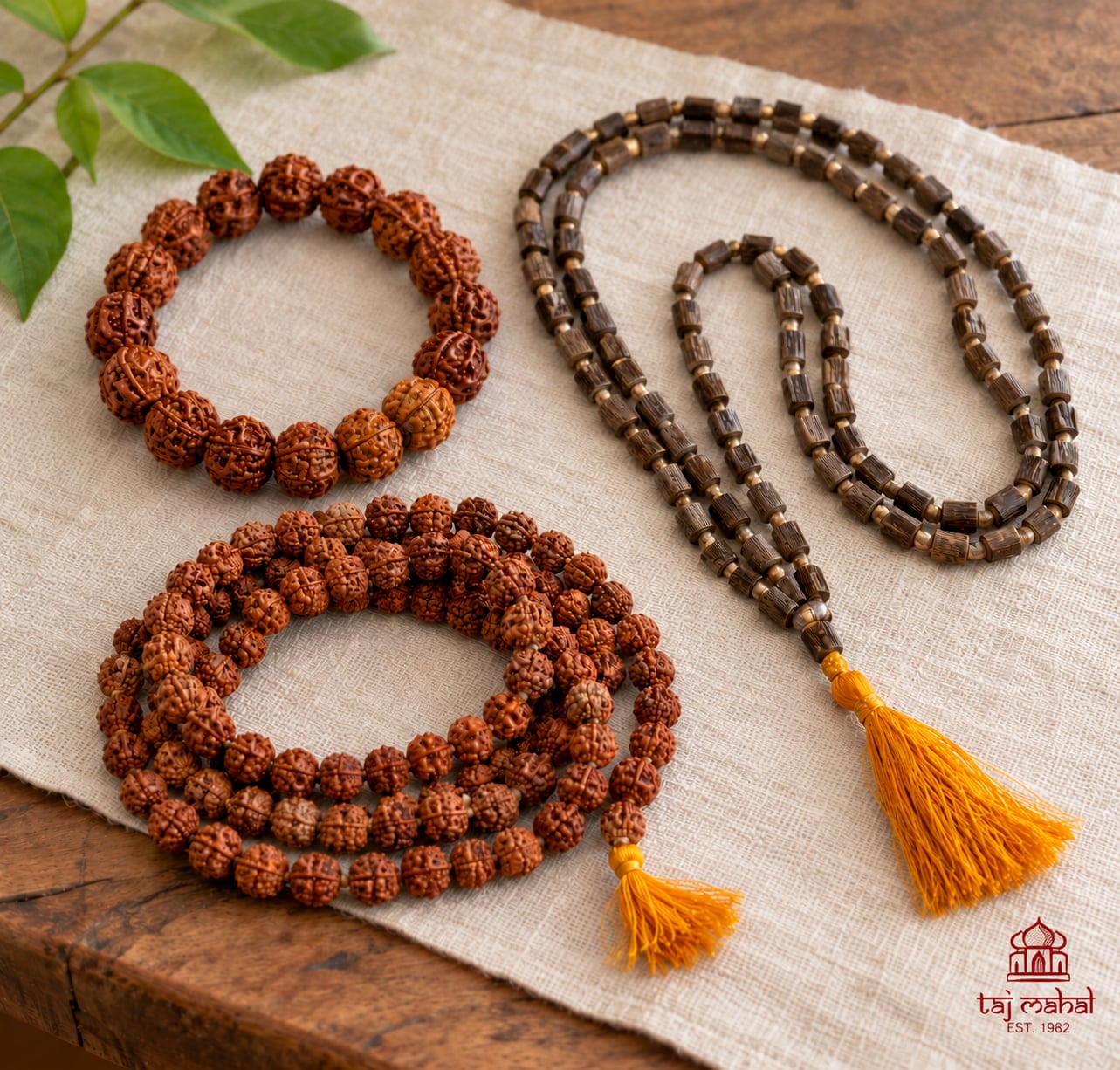
In a fast-paced world filled with constant noise and distraction, finding moments of stillness can feel almost impossible. This is where the Japamala steps in — not just as a piece of jewelry, but as a meaningful companion for meditation, mindfulness, and spiritual connection.
What Is a Japamala?
A Japamala (often simply called a mala) is a string of beads traditionally used for japa — the repetition of a mantra, prayer, or sacred name. As the beads pass gently through the fingers, one bead is moved for each repetition, helping the mind stay anchored in the practice. Japamalas are used for meditation, prayer, and spiritual focus across Hindu, Buddhist, and other Indian spiritual traditions.
The most well-known mala configuration is 108 beads, a number regarded as sacred and significant in Indian spiritual traditions, often completed by a larger "guru bead" where the practice begins and ends. That said, not every Japamala has exactly 108 beads — malas can be made with different bead counts and configurations depending on their tradition, purpose, and design.
More Than Jewelry — A Daily Ritual
Beyond formal practice, many people wear a Japamala as part of daily life:
- It can serve as a gentle reminder to slow down and stay present
- It carries the intentions and symbolism you give it
- It connects the wearer to a tradition of practice that is centuries old
Whether worn around your neck or wrapped around your wrist, a Japamala carries your intentions with you throughout the day.
Sacred & Devotional Malas: Rudraksha and Tulsi
Some malas are, first and foremost, instruments of spiritual and devotional practice. Two of the most beloved materials in Hindu tradition are Rudraksha and Tulsi — each with a history and significance of its own.
Rudraksha Mala
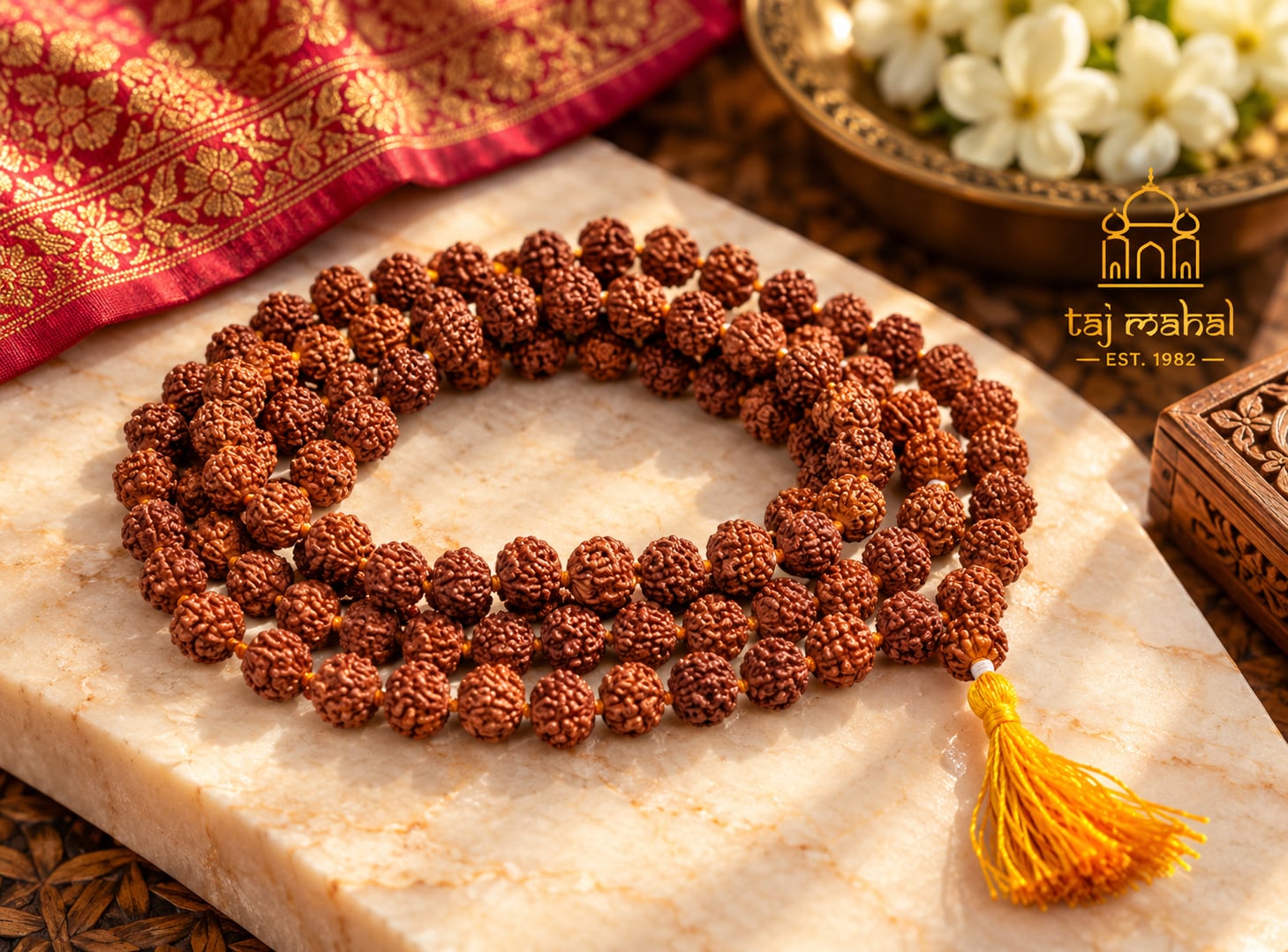
Rudraksha beads are the natural seeds of the Rudraksha tree, traditionally associated with Lord Shiva and used for centuries in Hindu spiritual practice, meditation, and japa. Each seed is unique, shaped by nature rather than polished to uniformity, and malas made from them are traditionally regarded as grounding and protective.
Rudraksha malas can be made with different natural seed sizes and different bead counts, each with its own character and feel. Rudraksha is also worn as bracelets — on their own or combined with stones such as Clear Quartz, which is traditionally associated with clarity.
Tulsi Mala
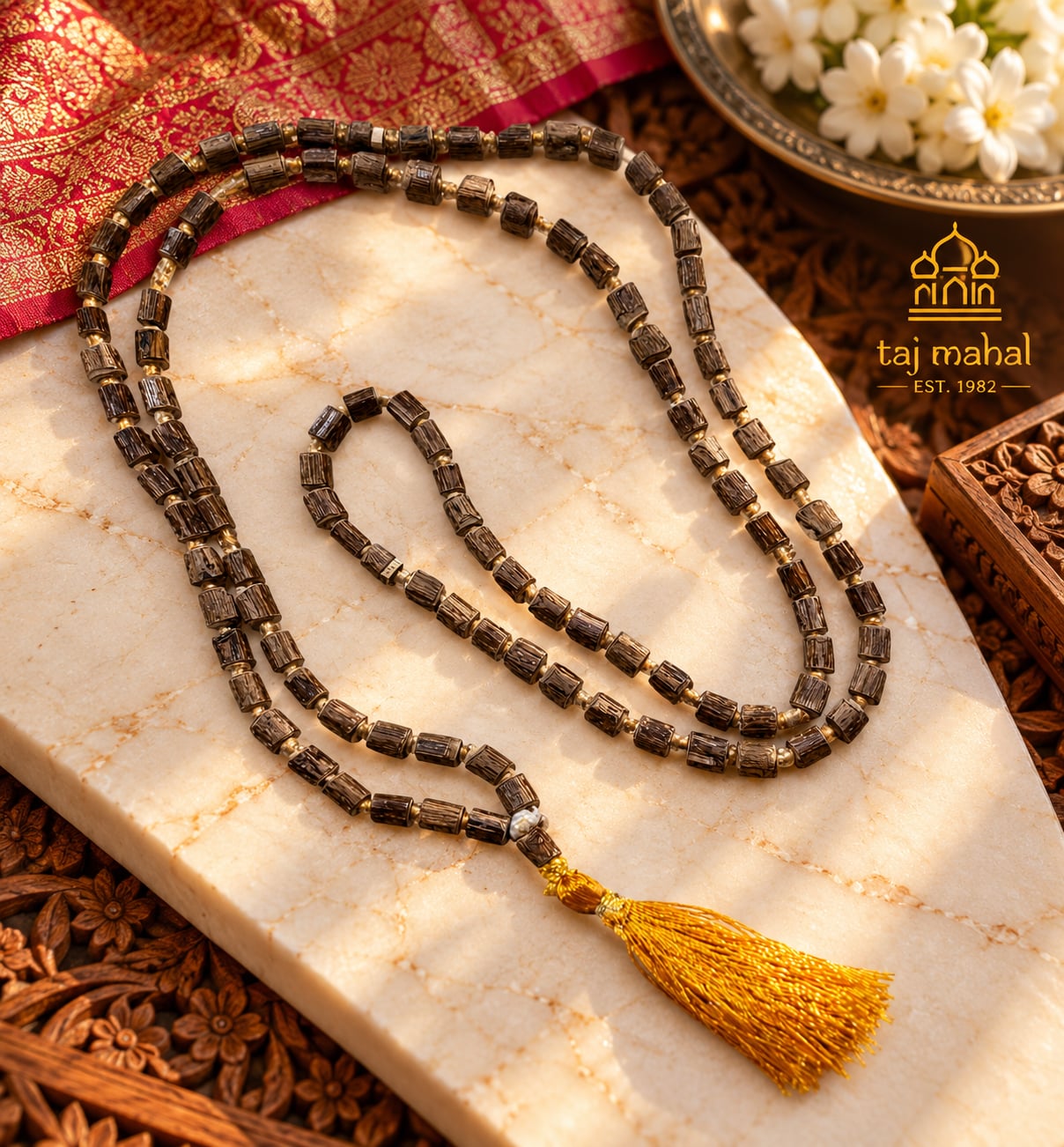
Tulsi — Holy Basil — is one of the most sacred plants in Hindu tradition, especially within devotion to Lord Vishnu and Lord Krishna. Malas made from Tulsi wood have long been associated with purity, peace, and devotional practice.
Tulsi appears in several distinct forms, each with its own purpose:
- Tulsi Japa Mala — a full mala traditionally used for mantra repetition and spiritual practice
- Tulsi Kanthi Mala — a shorter devotional necklace traditionally worn around the neck in Vaishnava traditions, as a sign of devotion
- Tulsi Bracelet — a wearable form of Tulsi that may be chosen for personal or devotional reasons
These forms are not interchangeable — a Kanthi Mala is not simply a short japa mala, and a bracelet is not a miniature necklace. Each carries its own tradition, and choosing between them often comes down to how you practice or what feels meaningful to you.
Stone Japamalas & the Chakras
Stone Japamalas combine the traditional mala form with gemstones and minerals. In contemporary spiritual and crystal practices, different stones are commonly associated with different chakras, intentions, and symbolic qualities — and many people choose a stone mala whose traditional associations reflect something they would like to cultivate in their lives.
These associations come from tradition and contemporary crystal practice rather than science. They are best understood as symbolism — a language of meaning that has grown around these stones over time. With that in mind, here are the stones we carry and what they are traditionally associated with.
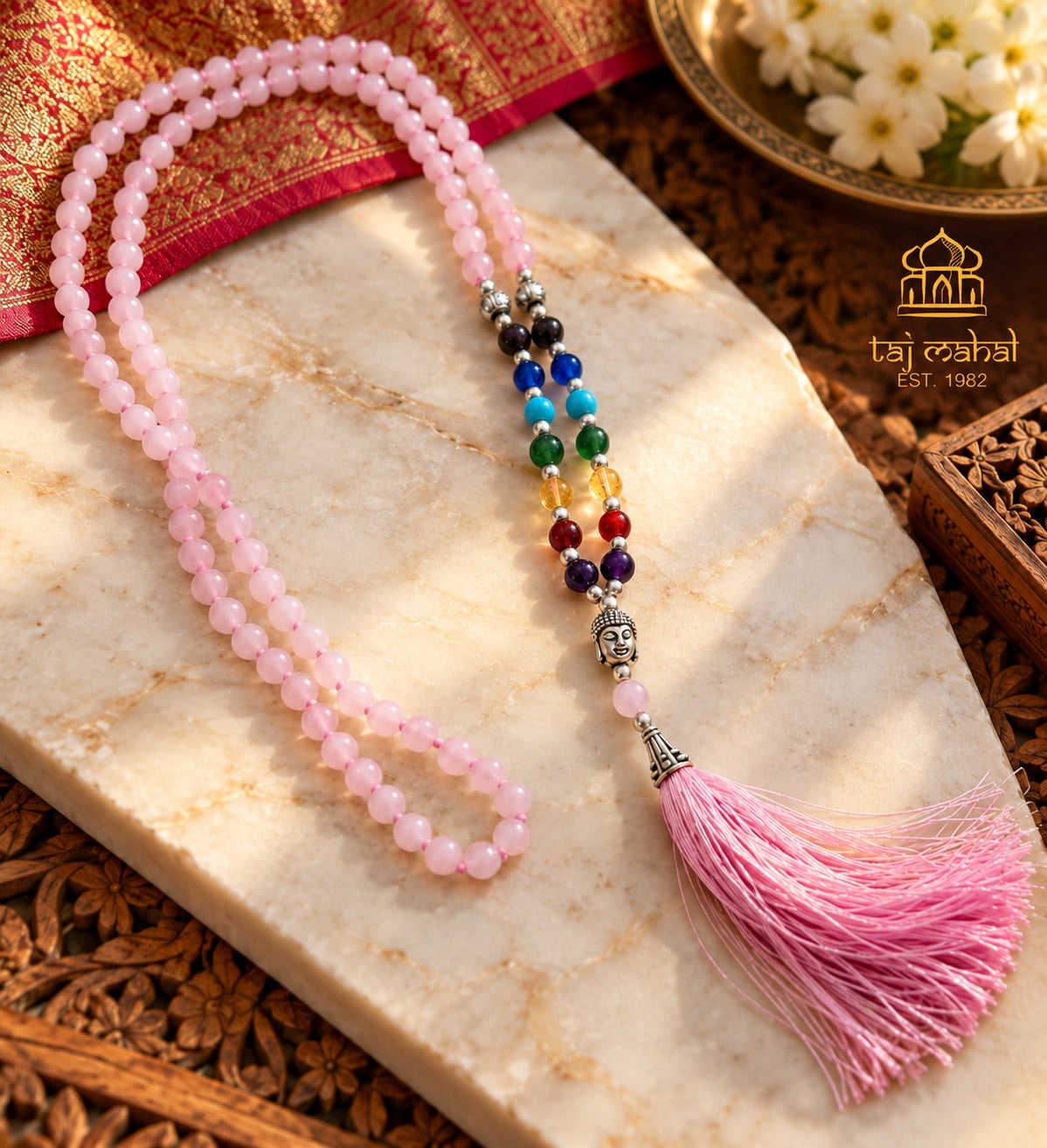
Rose Quartz
Traditionally known as the stone of love, Rose Quartz is commonly associated with love, compassion, emotional harmony, and self-love. In crystal traditions, its gentle quality is linked with comfort and opening the heart.
- Best for: Self-love, compassion, emotional harmony
- Energy: Soft, nurturing
- Wear it to: Invite love, harmony, and peace
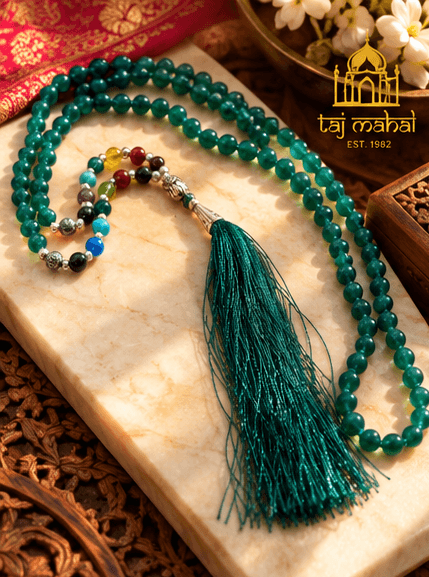
Jade
Jade has long symbolized harmony and prosperity. It is traditionally associated with harmony, balance, prosperity, and abundance, and is often chosen as a symbol of steady, long-term growth.
- Best for: Emotional balance, stability, prosperity
- Energy: Steady and grounding
- Wear it to: Create balance and invite abundance
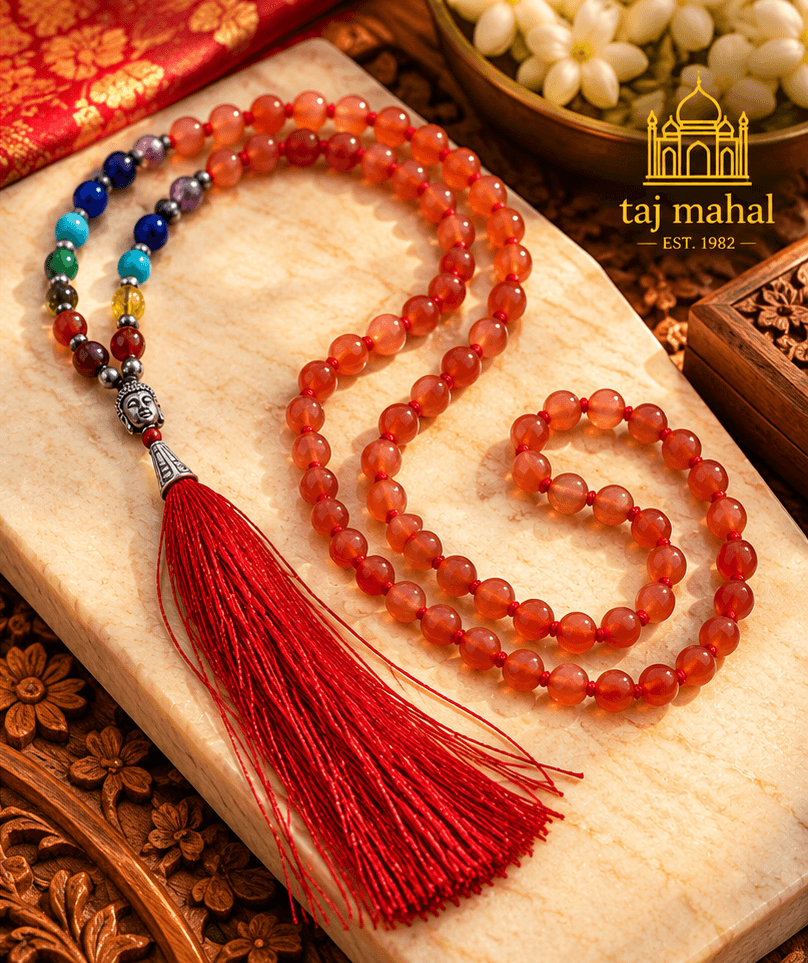
Orange Agate
This vibrant stone is commonly associated with the sacral chakra and with creativity, confidence, motivation, and vitality. In contemporary crystal practice it is often used with the intention of joy and creative energy.
- Best for: Creativity, confidence, motivation
- Energy: Warm and uplifting
- Wear it to: Spark creativity and boost your energy
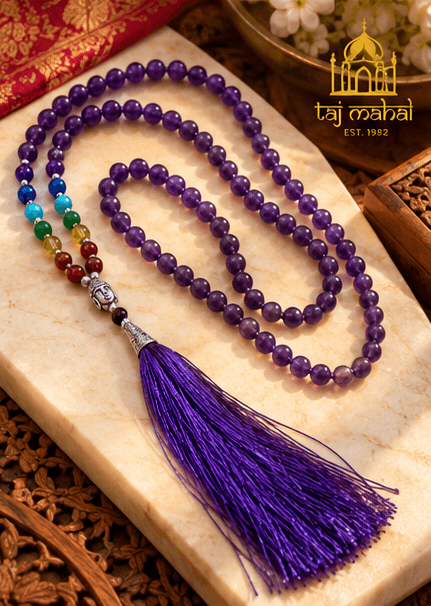
Amethyst
Amethyst is commonly associated with the third eye and crown chakras and with meditation, intuition, clarity, and spiritual awareness. Many people choose it as a meditation companion and a symbol of inner calm.
- Best for: Focus, clarity, spiritual growth
- Energy: Calm and soothing
- Wear it to: Support meditation and inner awareness
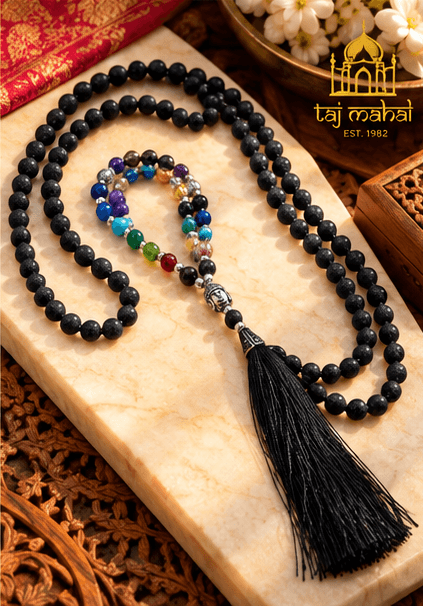
Black Agate
Black Agate is commonly associated with the root chakra and with grounding, stability, and protection. In crystal traditions it is often chosen as a symbol of steadiness and shelter from negativity.
- Best for: Protection, emotional stability
- Energy: Stabilizing and protective
- Wear it to: Stay centered and confident
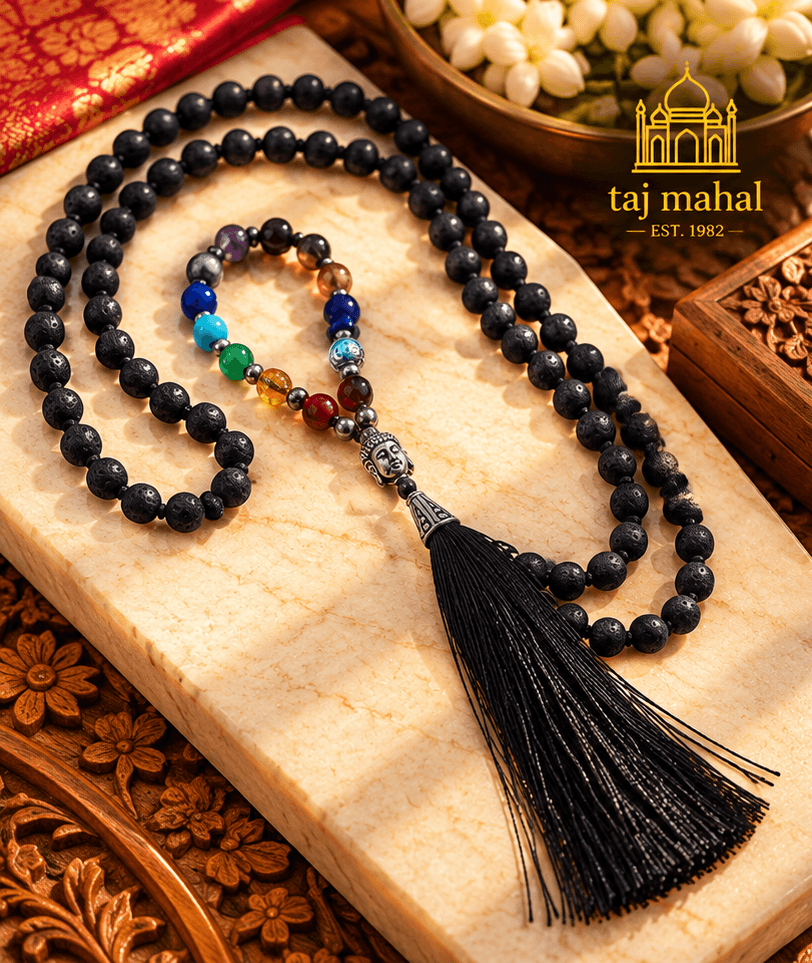
Black Jasper
Traditionally seen as a nurturing stone, Black Jasper is commonly associated with the root chakra and with grounding, steadiness, and emotional stability.
- Best for: Stress relief, grounding, mental clarity
- Energy: Supportive and grounding
- Wear it to: Feel steady and emotionally balanced
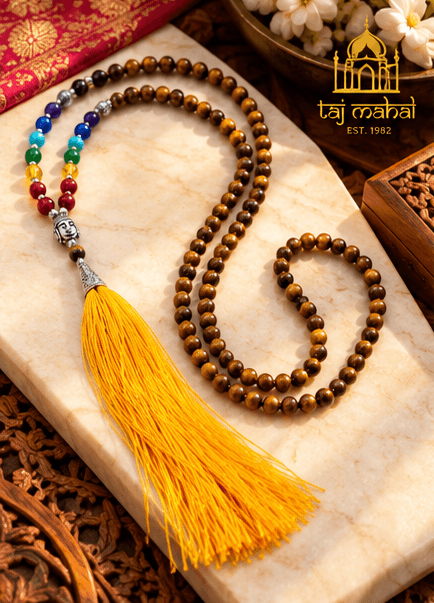
Tiger Eye
Tiger Eye is traditionally associated with the solar plexus chakra and with confidence, courage, focus, and personal strength, and is often worn as a symbol of protection and grounding.
- Best for: Confidence, motivation, overcoming fear
- Energy: Empowering and protective
- Wear it to: Feel strong and focused
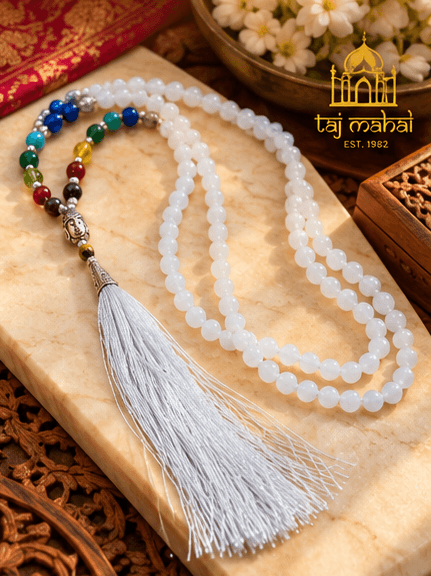
Selenite
Often called the "Stone of Angels" in contemporary crystal traditions, Selenite is associated with the crown chakra and with clarity, purification, and spiritual awareness.
- Best for: Meditation, clarity, spiritual awareness
- Energy: Light and purifying
- Wear it to: Feel clear, calm, and spiritually aligned
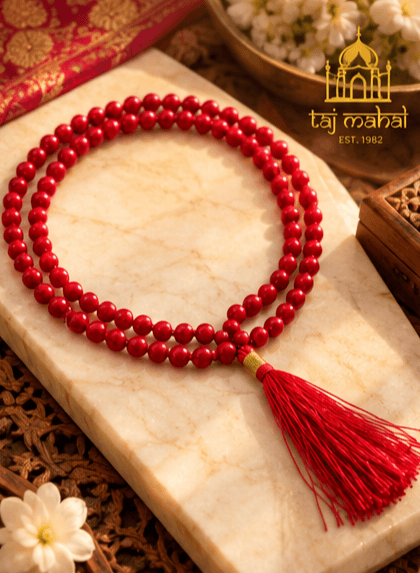
Red Coral
Red Coral is traditionally associated with the root and sacral chakras and with vitality, courage, strength, and passion, and is worn as a symbol of protection from negativity.
- Best for: Strength, confidence, emotional balance
- Energy: Vital and empowering
- Wear it to: Feel energized and fearless
Stone Bracelets
Gemstone traditions are not limited to full Japamalas. Taj Mahal also carries stone bracelets — along with Rudraksha and Tulsi bracelets — for those who prefer a smaller, everyday form.
A bracelet can be a simple way to wear a stone you feel connected to, or to keep a personal reminder of an intention close throughout the day. Many people choose them for the same traditional associations described above; others simply enjoy how they look and feel.
How to Choose a Japamala
There is no single right way to choose a Japamala. Visitors often find themselves drawn to one of three paths:
- Tradition: choosing a Rudraksha or Tulsi mala because of its place in spiritual or devotional practice
- Symbolism: choosing a Stone Japamala for a particular stone, chakra association, or intention
- Personal connection: choosing a piece simply because they naturally feel drawn to it
No one of these ways is better than another. A mala chosen for tradition, for symbolism, or simply because it caught your eye can all be equally meaningful.
Find the Piece That Speaks to You
Learning about the meaning and traditions behind Japamalas can help you understand them — but choosing one can be something much more personal.
At Taj Mahal, we invite you to take your time. Look at the different stones, seeds, colors and textures. Notice which piece naturally draws your attention.
Some pieces are meant to find you.
Our Sacred Pieces have a story of their own — one we don't reveal before you choose.
Final Thoughts: Wearing Your Intention
A Japamala is more than an accessory — for many, it becomes a personal companion for mindfulness and intention. Whether you're drawn to love, clarity, protection, or spiritual growth, the mala you choose becomes a reflection of your own journey.
Wear it for peace.
Keep it for purpose.
Let it remind you — every day — to pause, breathe, and return to yourself.